Types of Waterproofing Tanking Systems Explained
Explore the main types of waterproofing tanking systems, including torch-on membranes, bentonite, and HDPE. Learn where each system works best to enhance durability, compliance, and cost efficiency in construction projects.
EDUCATIONAL
Sumit Kumar
4/17/2026
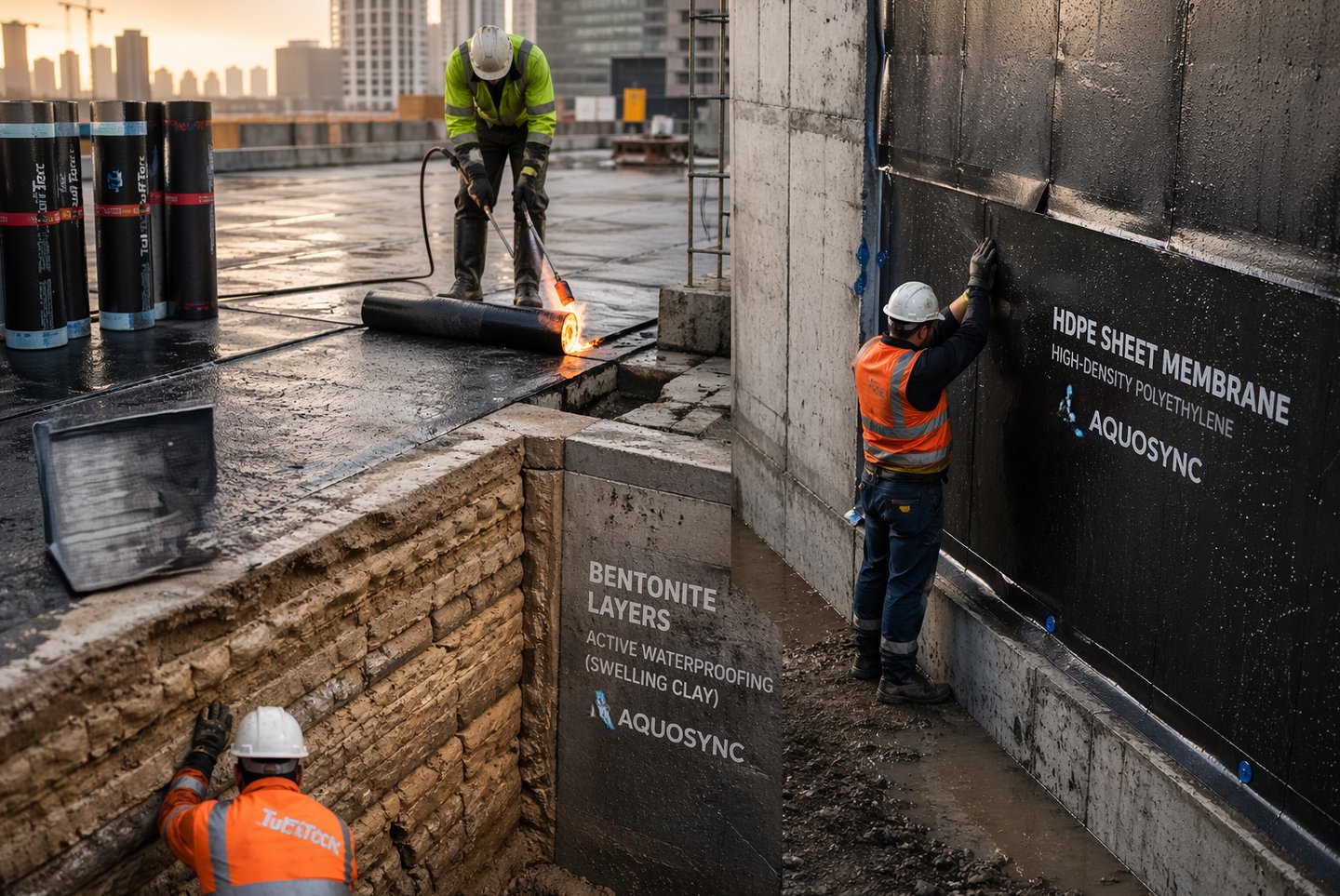
Not all waterproofing systems are built the same, and choosing the wrong type of tanking can quietly turn into one of the most expensive mistakes on a project. Each system is designed for a specific environment, and understanding the difference is what separates a safe job from a future failure. Torch-on membranes are one of the most commonly used systems, ideal for roofs and exposed areas because they create a strong, bonded layer - but they rely heavily on proper installation and surface preparation. Bentonite systems work very differently; they expand when in contact with water, making them perfect for below-ground structures like basements where constant moisture pressure exists, almost like a self-sealing clay barrier. Then you have HDPE and sheet membrane systems, which act as a physical barrier preventing water ingress, often used in critical areas like tunnels, retaining walls, and blindside applications where access is limited after construction. The key is not just knowing these systems, but matching them correctly to the project conditions - exposure, water pressure, substrate, and long-term durability requirements. Choosing a system without understanding this is like wearing the wrong gear for the job - you might get through the day, but it won’t hold up over time. The right tanking decision upfront protects structure, reputation, and long-term cost.
Not sure which waterproofing system is right for your project? AQUOSYNC helps you choose, quantify, and price the correct tanking solution with precision - so you avoid costly mistakes before they happen.