Why Most Waterproofing Failures Start at Design Stage (Not Installation)
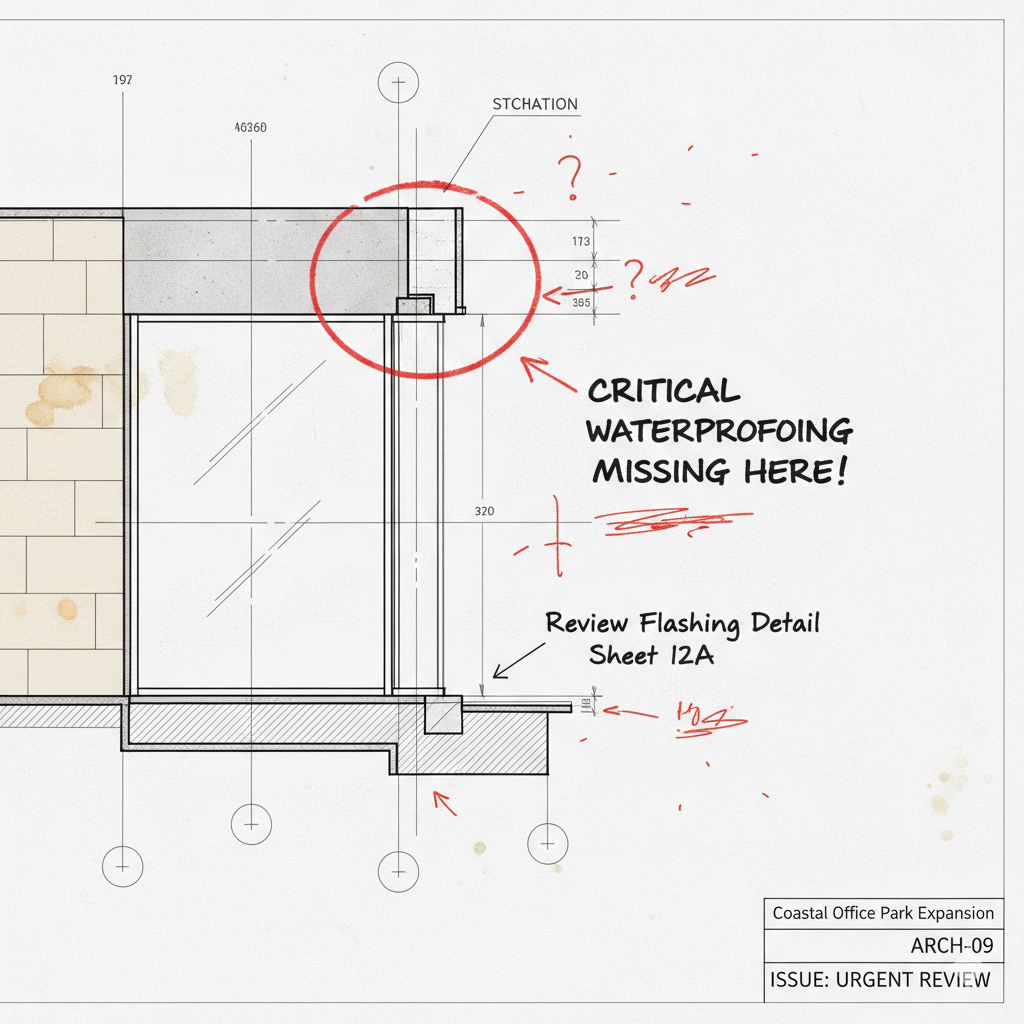
When a waterproofing failure occurs, the installer often takes the blame. But in reality, most failures are already “locked in” before the first membrane is laid. Poor detailing, unclear scopes, and missed transitions at design stage quietly create risks that show up months - or years - later.
EDUCATIONAL
Sumit Kumar
2/18/2026
1. The Silent Risk: Incomplete Waterproofing Details
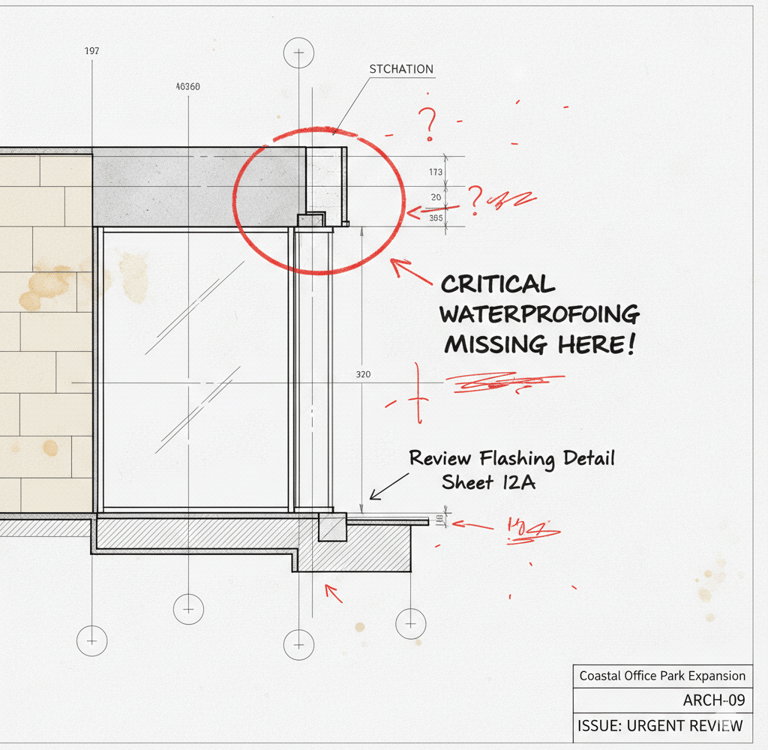
Many drawings show waterproofing as a single line or generic note. Critical areas like upstands, penetrations, terminations, and junctions are often under-detailed or missing altogether. Installers are then forced to interpret the intent - and interpretation leads to inconsistency.
2. Design vs Reality on Site
Designs may look compliant on paper, but site conditions tell a different story:
Structure tolerances don’t match neat details
Services clash with membrane zones
Falls are insufficient once finishes are installed
Without early constructability input, waterproofing becomes reactive instead of planned.
3. Why “Install Correctly” Isn’t Enough
Even the best installer can’t fix:
Inadequate falls
No allowance for movement
Incorrect substrate build-ups
Conflicting trade interfaces
Waterproofing works as a system, not a product. If the system isn’t designed properly, installation quality alone won’t save it.
4. How Early QS & Waterproofing Review Prevents Failure
Early review helps to:
✔ Identify missing or unclear details
✔ Define clear waterproofing scope boundaries
✔ Allow correct quantities and waste factors
✔ Reduce variations and disputes later
This protects everyone - contractor, builder, and client.
Key Takeaway
Waterproofing failures don’t usually start with poor workmanship - they start with poor planning. Strong design review and early QS input turn waterproofing from a liability into a controlled, predictable trade.
Concerned your plans may be under-detailed?
We review waterproofing drawings before construction to flag design gaps, missing details, and scope risks.